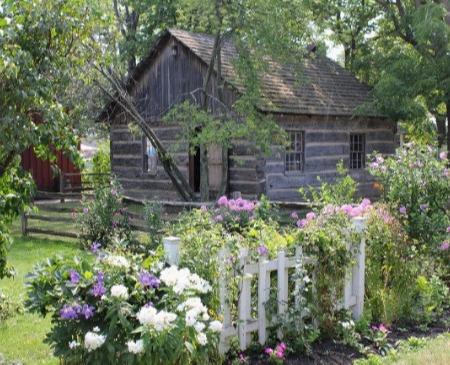
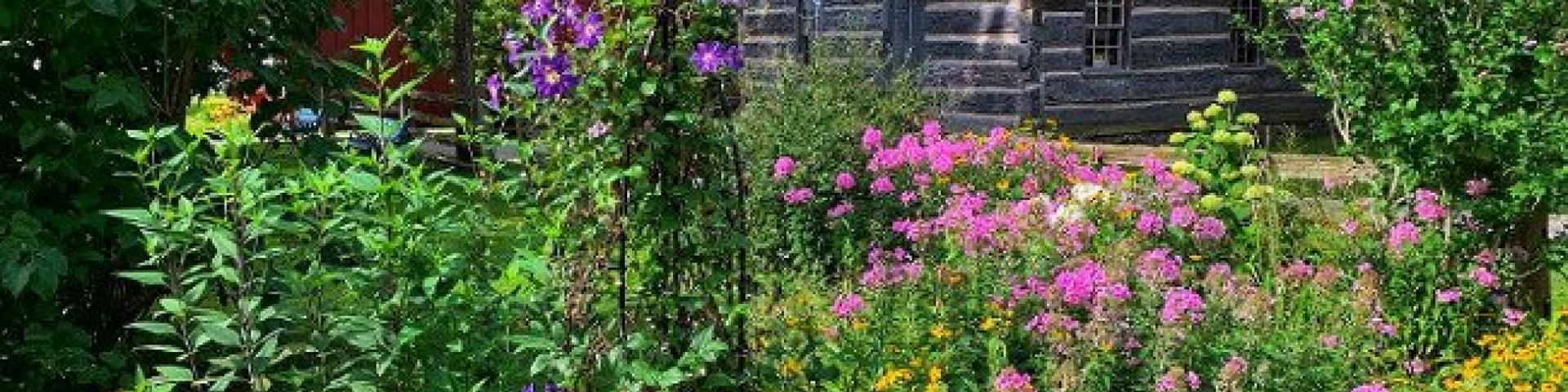
Visit our grounds where heritage buildings are set among majestic trees and historic gardens. Take a leisurely stroll along the pathways, admire the antique ironwork fencing, enjoy the shade in the memorial pavilion during your picnic lunch.
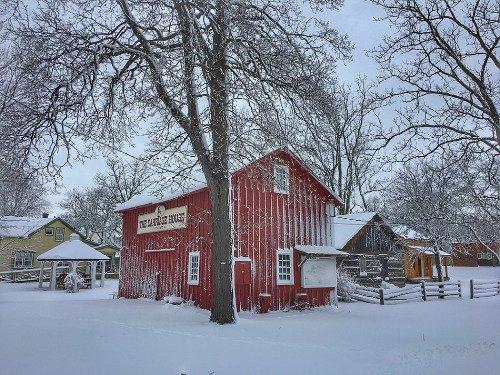
Carriage House (1870)
The Carriage House is one of the buildings original to the Williams estate. Hand-hewn beams support the two-story structure with board and batten siding. Inside, you will find Arabella Williams' carriage, and exhibits.
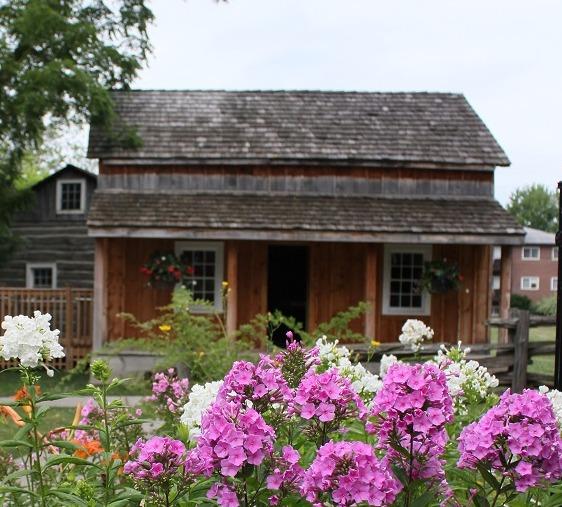
Timber Cabin (1840)
Moved to the museum grounds in 2014 from Brookfield Rd, the cabin represents the Graf Weaving Shed for exhibits and the interpretation of spinning, weaving and fibre arts. The Graf family of Gasline were well-known for their coverlets, woven on a jacquard loom, and often given as wedding gifts. Inside the cabin is one of the simple floor looms used by the Graf family.
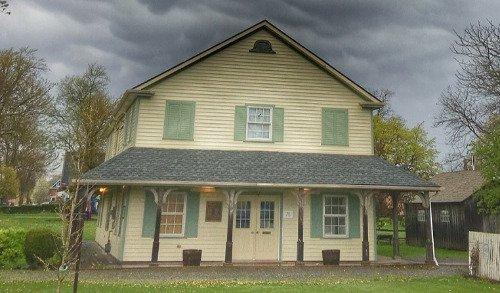
J.W. Sharpe Heritage Resource Centre (1995)
This is a climate-controlled storage facility built specifically to house and preserve the museum's artifact collection. This is also the home of Benton Neff's original one-of-a-kind 1901 Steam Buggy, on display in the front vestibule.
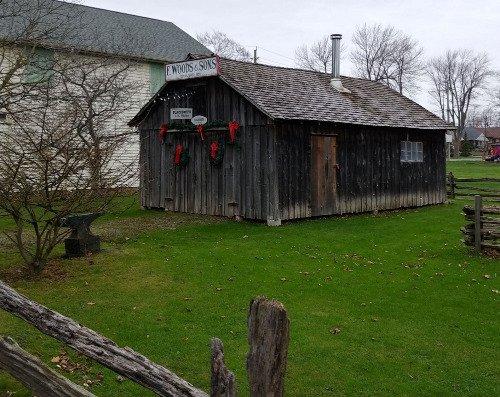
Blacksmith Shop (1880)
This workshop was relocated from Port Colborne Quarries property to the museum grounds in 1984 to represent F.W. Woods and Sons, an 1880s blacksmith and machine shop serving the canal trade.
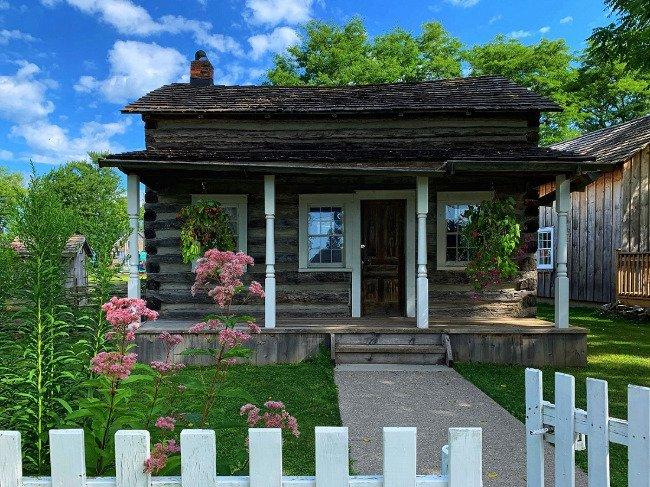
Sherk Log House (1844)
Reconstructed on the museum grounds in 1980, this log home was originally John and Sally Sherk's house. It portrays the typical farmhouse lifestyle of the 1840s. A summer kitchen was added in 1983.
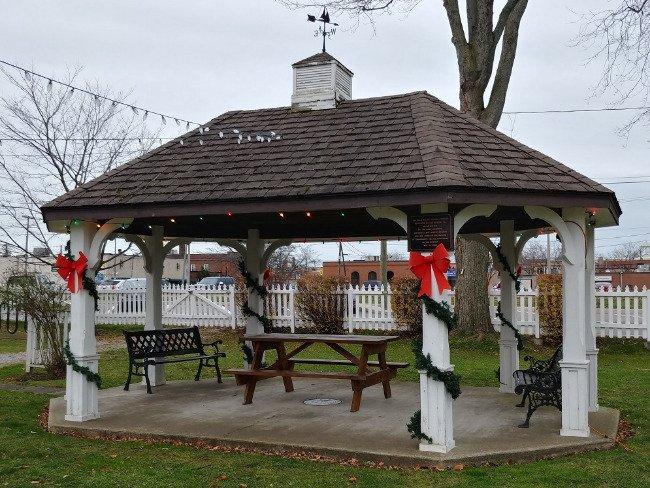
Memorial Pavilion (2000)
Enjoy a quiet rest or picnic lunch under the pavilion, built through memorial donations to the museum.
Log Schoolhouse (1835)
Probably one of the first schoolhouses in Humberstone Township, with 1835 carved on the original door. Reconstructed on the museum grounds in 1976, it portrays early schools in Niagara.